



The “Guest House” Poem & Rumi: Authenticity and Interpretation
Many popular versions aren’t direct translations, but interpretations—like those by Ladinsky and Barks—often lacking the original Persian text for verification.
Authenticity is questioned, as these works are often original poems inspired by Rumi, marketed as translations for broader appeal.
The Controversy Surrounding Modern “Translations”

The core of the debate centers on the term “translation” itself. Critics argue that works popularized by figures like Daniel Ladinsky and Coleman Barks are, fundamentally, interpretations or adaptations, not faithful renderings of Rumi’s original Persian poetry. This isn’t merely a semantic quibble; it impacts the authenticity attributed to these versions.
A significant issue is the frequent absence of the original Persian text alongside the English adaptation. Genuine translations are typically presented with the source material, allowing for comparison and verification. The lack of this transparency fuels skepticism. Many readers are unaware they aren’t engaging with a direct translation, but with a poet’s response to Rumi’s ideas.
This marketing practice, initially observed with Ladinsky’s “The Gift” presented as Hafiz translations, raises ethical concerns about misrepresentation and capitalizing on Rumi’s established reputation.
Daniel Ladinsky and the Marketing of “Translations”
Daniel Ladinsky’s approach, particularly with “The Gift,” established a controversial precedent. He presented original poems, inspired by Hafiz, as translations, achieving significant commercial success through this marketing strategy. This model was then replicated with Rumi’s work, attracting a wider audience than direct translations might have garnered.
The criticism lies in the implication that readers are receiving Rumi’s actual words when, in reality, they are experiencing Ladinsky’s poetic interpretations. This raises questions about authenticity and the ethical responsibility of presenting creative work as translation. The appeal stems from accessibility; Ladinsky’s language resonates with modern readers.
However, the lack of accompanying Persian text and the absence of demonstrable translation skills further solidify the argument that these are original compositions leveraging Rumi’s fame.
Coleman Barks’ Approach to Rumi’s Work
Coleman Barks’ method diverges from traditional translation. He openly admits to not knowing Persian, instead relying on existing English and French translations as source material. His work is, therefore, an interpretation of interpretations, a distillation of Rumi’s essence through a Western lens.
This approach has sparked debate. While lauded for making Rumi accessible to a broader English-speaking audience, critics argue it sacrifices accuracy and authenticity. Barks prioritizes poetic resonance over literal fidelity, crafting verses that feel like Rumi, even if they aren’t direct renderings.
The core issue isn’t the quality of Barks’ poetry, but the labeling of it as “translation.” He acknowledges this, yet continues to present his work as such, fueling the ongoing controversy surrounding Rumi’s accessibility.
The Lack of Original Persian Text in Many Versions
A significant concern surrounding popular renditions of Rumi, including “The Guest House,” is the frequent absence of the original Persian text. This omission hinders verification and independent scholarly assessment of the translation’s accuracy. Without the source material, it’s impossible to determine how closely the English version aligns with Rumi’s intent.
This lack of transparency fuels skepticism, particularly regarding works marketed as direct translations but lacking traceable origins. Critics argue that this practice prioritizes marketability over scholarly rigor, capitalizing on Rumi’s popularity without providing the means for genuine engagement with his work.
The inability to compare English versions to the Persian original raises questions about the extent to which these interpretations reflect Rumi’s actual teachings.

Understanding the Poem’s Core Message
The poem utilizes a powerful metaphor, inviting readers to embrace all experiences—joy and sorrow—as valuable guests on the path to inner peace.
The Metaphor of the Guest House
The central image of Rumi’s poem is a “guest house,” representing the human heart and mind; This isn’t a literal dwelling, but a space within us where emotions, thoughts, and experiences arrive and reside temporarily. Each “guest”—whether pleasant or painful—is welcomed with open arms, mirroring a philosophy of radical acceptance.
Rumi suggests that resisting or dismissing these internal visitors only prolongs suffering. Instead, acknowledging and observing them, without judgment, allows them to run their course and eventually depart. The guest house metaphor beautifully illustrates that all feelings, even those we deem negative, hold a purpose and contribute to our growth.
This acceptance isn’t passive; it’s an active choice to create a welcoming space for the entirety of our inner world, fostering self-awareness and emotional resilience.
Welcoming All Emotions: Joy and Sorrow
Rumi’s “Guest House” doesn’t discriminate between emotions; joy is as much a welcomed guest as sorrow. The poem emphasizes that both experiences are transient visitors, offering opportunities for learning and deepening our understanding of ourselves. To shut the door on sadness, for example, is to deny a part of the human condition.
The poem encourages us to receive each feeling with gratitude, recognizing that even painful emotions can be teachers. By embracing the full spectrum of our emotional landscape, we cultivate a more compassionate and balanced inner life.
This inclusive approach challenges the societal tendency to prioritize happiness while suppressing discomfort, ultimately leading to greater emotional freedom and authenticity.
Acceptance as a Path to Inner Peace
The core message of “The Guest House” revolves around acceptance – not necessarily liking what arises within us, but allowing it to be. Resistance to emotions fuels suffering, while acceptance creates space for peace. Rumi suggests that by fully receiving each “guest,” we diminish its power over us.
This isn’t passive resignation, but an active choice to observe our inner experiences without judgment. It’s about recognizing that emotions are fleeting phenomena, constantly changing and evolving.
Through acceptance, we move from being controlled by our feelings to simply witnessing them, fostering a sense of inner stillness and liberation. This practice aligns with core tenets of mindfulness and emotional intelligence.
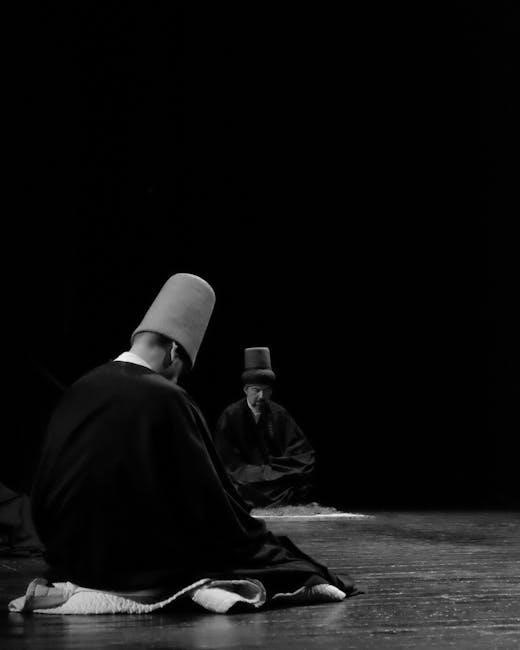
The Poem’s Origins and Variations
Tracing the poem’s lineage is difficult; its true Rumi authorship is debated, with numerous English interpretations impacting its reception and perceived meaning.
Tracing the Poem’s Lineage: Is it Truly Rumi?
The question of whether “The Guest House” is genuinely a work of Jalaluddin Rumi remains a significant point of contention. Unlike traditional translations presented alongside the original Persian, tracing this poem back to a specific masnavi or divan proves remarkably challenging.
Critics highlight the absence of a verifiable source text, fueling skepticism about its direct attribution to Rumi. Many believe it’s a modern adaptation, heavily influenced by Rumi’s themes but not a literal translation. This raises concerns about the authenticity of widely circulated versions, particularly those popularized without scholarly backing.
The lack of transparency regarding the original Persian source is a key issue, prompting calls for greater accountability from translators and publishers. Determining its true lineage is crucial for understanding its place within Rumi’s broader body of work.
Different English Interpretations and Their Impact
Varied English interpretations of “The Guest House” significantly shape its reception and understanding. Coleman Barks’ approach, relying on translations of translations, prioritizes poetic resonance over literal accuracy, sparking debate among scholars.
Daniel Ladinsky’s work, often presented as direct translation but acknowledged as inspired poetry, broadened the poem’s reach but also fueled controversy regarding authenticity. These differing approaches impact how readers connect with Rumi’s core message.
The emphasis on accessibility versus fidelity influences the poem’s emotional impact and perceived wisdom. While interpretations can make Rumi relatable, they also risk distorting the nuances of the original Persian, highlighting the power of translation choices.
The Role of Interpretation vs. Direct Translation

The debate surrounding “The Guest House” centers on the tension between interpretation and direct translation. While a direct translation aims for linguistic accuracy, interpretation prioritizes conveying the poem’s essence and emotional impact to a new audience.
Critics argue that interpretations, like those by Barks and Ladinsky, stray too far from the original Persian, becoming more about the translator’s voice than Rumi’s. Conversely, proponents believe interpretation is necessary to bridge cultural and linguistic gaps.
The lack of readily available original texts exacerbates this issue, making it difficult to verify the accuracy of interpretations. Ultimately, understanding the distinction is crucial for appreciating the poem’s complexities and acknowledging the translator’s role.

Finding Authentic Rumi Resources
To truly understand Rumi, explore Persian language studies and seek translations alongside the original texts for contextual accuracy and deeper insight.
Resources for Studying Persian and Rumi’s Original Works
Delving into Rumi’s work authentically necessitates engaging with the original Persian texts. Several resources facilitate this journey. For Persian language learning, platforms like Duolingo, Memrise, and Rosetta Stone offer introductory courses, while more intensive study can be pursued through university programs or dedicated language schools.
For accessing Rumi’s Masnavi and Divan-e Shams in their original form, websites like the Farsinet archive provide digitized manuscripts. However, navigating these requires a strong grasp of Persian. Scholarly editions with critical apparatus, published by institutions like Leiden University, offer more support for researchers.
Furthermore, consider exploring resources focused on Sufi studies, as Rumi was a prominent Sufi mystic. Books by scholars like Annemarie Schimmel and Seyyed Hossein Nasr provide valuable context and interpretation. Ultimately, a commitment to learning Persian unlocks a richer, more nuanced understanding of Rumi’s profound poetry.
Identifying Reliable Rumi Translations
Given the prevalence of interpretations marketed as translations, discerning reliable Rumi translations requires careful consideration. Look for editions that present the original Persian text alongside the English rendering, allowing for comparison and verification – a practice often absent in popularized versions.
Translations by scholars with expertise in both Persian language and Sufi traditions are generally more trustworthy. Consider works by Coleman Barks, acknowledging his interpretive approach, or seek out newer translations striving for greater fidelity to the original.
Critically evaluate the translator’s preface and notes; a transparent discussion of their methodology is a positive sign. Beware of overly poetic or embellished language that may stray from Rumi’s core message. Prioritize editions published by reputable academic presses for enhanced accuracy.
The Importance of Context in Understanding Rumi
Rumi’s poetry is deeply rooted in 13th-century Persian Sufi culture, making contextual understanding crucial for accurate interpretation. The “Guest House” poem, like others, gains richer meaning when viewed within this framework of mystical Islamic thought and poetic tradition.
Ignoring the historical and spiritual context risks misinterpreting symbolism and nuances. Rumi frequently employs metaphors and allegories specific to his time, requiring familiarity with Sufi concepts like fana (annihilation of the self) and ishq (divine love).
Understanding the intended audience—Rumi’s disciples—illuminates the poem’s didactic purpose. Studying commentaries by Sufi scholars provides valuable insights into the poem’s deeper layers of meaning, beyond a superficial reading.

The Poem’s Relevance Today
The “Guest House” offers timeless wisdom, promoting emotional intelligence and self-acceptance—vital skills in modern life—through welcoming all feelings.
Its enduring popularity stems from its universal message of inner peace amidst life’s inevitable joys and sorrows.

Applying the “Guest House” Philosophy to Modern Life
In today’s fast-paced world, the “Guest House” poem provides a powerful framework for navigating emotional challenges. The core message—welcoming all experiences, even painful ones—resonates deeply with the growing emphasis on emotional intelligence and mental wellbeing.
Practically, this means acknowledging and accepting feelings like sadness, anger, or anxiety, rather than suppressing or avoiding them. Treating these emotions as “guests” allows for observation and understanding, fostering self-compassion.
This approach can be applied to interpersonal relationships as well, encouraging empathy and acceptance of others’ emotional states. By embracing the full spectrum of human experience, we cultivate resilience and inner peace, mirroring Rumi’s profound wisdom for contemporary living.
Emotional Intelligence and Self-Acceptance
The “Guest House” poem beautifully illustrates key principles of emotional intelligence. Recognizing, understanding, and accepting one’s own emotions – and those of others – are central to Rumi’s message. The poem encourages us to move beyond judgment and embrace the totality of our inner landscape.
Self-acceptance, a cornerstone of mental health, is directly fostered by this practice. Instead of battling unwanted feelings, the poem suggests offering them hospitality, creating space for processing and growth. This mindful approach reduces internal conflict and promotes emotional regulation.
Ultimately, the poem’s wisdom aligns with modern psychological understanding, highlighting the transformative power of embracing vulnerability and cultivating a compassionate relationship with oneself.
The Poem’s Enduring Appeal and Popularity
The “Guest House” poem’s widespread popularity stems from its universally relatable message of acceptance and inner peace. Despite debates surrounding its authenticity as a direct Rumi translation, its core themes resonate deeply with modern audiences seeking emotional solace.
Its concise and accessible language, coupled with the powerful metaphor of welcoming all emotions, contributes to its enduring appeal. The poem offers a simple yet profound framework for navigating life’s challenges and cultivating self-compassion.
Furthermore, the poem’s circulation through various platforms, including online PDFs and social media, has amplified its reach, solidifying its place in contemporary spiritual and self-help discourse.

Qingdao, China: A Tangential Connection (Based on Search Results)
Qingdao, a coastal city in Shandong Province, China, offers a serene backdrop—much like the poem’s invitation to inner peace—despite being geographically distant.
Qingdao’s Location and Geographical Significance
Qingdao resides in eastern China’s Shandong province, strategically positioned on the Yellow Sea coast. Its location is significant, facing both Korea and Japan across the water, historically making it a crucial port city for trade and cultural exchange. The city occupies the south coast of the Shandong Peninsula, nestled at the entrance to Jiaozhou Bay, renowned as one of the finest natural deep-water harbors globally.
This coastal placement has profoundly shaped Qingdao’s development, fostering economic growth and attracting international influence. The geographical features—the bay, the coastline, and the surrounding hills—contribute to its unique charm and appeal, mirroring the poem’s embrace of diverse landscapes within the self.
Qingdao’s Coastal Features and Attractions
Qingdao is celebrated for its picturesque beaches, offering respite and recreation along its extensive coastline. The city boasts colonial architecture, a legacy of its past as a German concession, adding a unique European flair to its urban landscape. These architectural gems, alongside the natural beauty of the shore, create a captivating atmosphere for visitors.
Furthermore, Qingdao is renowned for its brewing traditions, particularly its Tsingtao beer, a globally recognized brand. The city’s coastal features and attractions, much like the welcoming spirit of Rumi’s poem, invite openness and appreciation for life’s varied experiences, fostering a sense of tranquility and joy.
Brief Mention of Qingdao’s Historical Context
Qingdao’s history is marked by a period of German colonization from 1898 to 1914, leaving a distinct architectural and cultural imprint on the city. Following World War I, it came under Japanese control until the end of World War II, further shaping its development. This complex past contributes to Qingdao’s unique character, blending Eastern and Western influences.

Interestingly, much like the layers of emotion welcomed in Rumi’s “Guest House,” Qingdao’s history demonstrates acceptance of diverse influences. The city’s evolution reflects a willingness to integrate different perspectives, mirroring the poem’s message of embracing all that life brings, both joyful and sorrowful.
Leave a Reply
You must be logged in to post a comment.